Google for Jobs (GFJ) has become one of the most influential job search platforms in the United States. For job boards and employers, it is a competitive marketplace where visibility shapes traffic, candidate flow, and revenue potential. To understand that landscape, Aspen Tech Labs analyzed Apply button sources across the 30 largest US metropolitan areas, focusing on Transportation, Healthcare, and Skilled Trades. These sectors combine high hiring volume with high search activity, making them ideal for spotting meaningful shifts in job board visibility.
Two patterns stand out clearly.
Generalist job boards such as Indeed and Glassdoor continue to dominate, but niche boards are steadily expanding their footprint. Based on Aspen Tech Labs’ analysis, this growth is most visible in sectors like healthcare, where complex role requirements and high applicant volume favor platforms that offer more precise filtering and stronger role alignment.
Generalist job boards still have the scale advantage
Even as niche activity grows, generalist job boards hold the largest share of GFJ Apply button visibility across all industries studied. Their advantage rests on several structural factors:
– Stronger SEO architecture that supports consistent indexing by Google.
Google’s Job Posting structured data guidelines explain that adding the correct schema makes job listings eligible for enhanced job search experiences in Google Search, which improves visibility for sites that implement structured data correctly.
– Large and stable traffic volume.
Indeed is ranked as the most visited Jobs and Employment website in the United States by SimilarWeb’s category rankings, and Glassdoor appears at #4 among the top Jobs and Employment sites, demonstrating the scale advantage generalist job boards maintain.
– Universal employer distribution.
Most ATS systems automatically push listings to generalist boards like Indeed and Glassdoor, strengthening their visibility loop.
Despite this scale, niche boards are becoming more visible in sectors where specialization and credentialing matter.
Where niche boards are gaining momentum
Transportation
Niche transportation boards strengthened their presence from 11.21% to 13.40% over six months, while generalist job boards held steady (Figure 1). This suggests that niche platforms are expanding their relevance on Google for Jobs rather than competing only for residual traffic. Company career site visibility also remained stable, while smaller mixed sources declined.
Industry conditions reinforce this shift.
The American Trucking Associations’ updated Driver Shortage Report and Forecast notes that the industry continues to face a persistent shortage of professional drivers. ATA highlights that the shortage remains one of the most significant long-term challenges in the sector, driven by retirements, demand growth, and limited entry of new drivers. These conditions place greater emphasis on recruiting channels that specialize in matching qualified drivers with open roles.
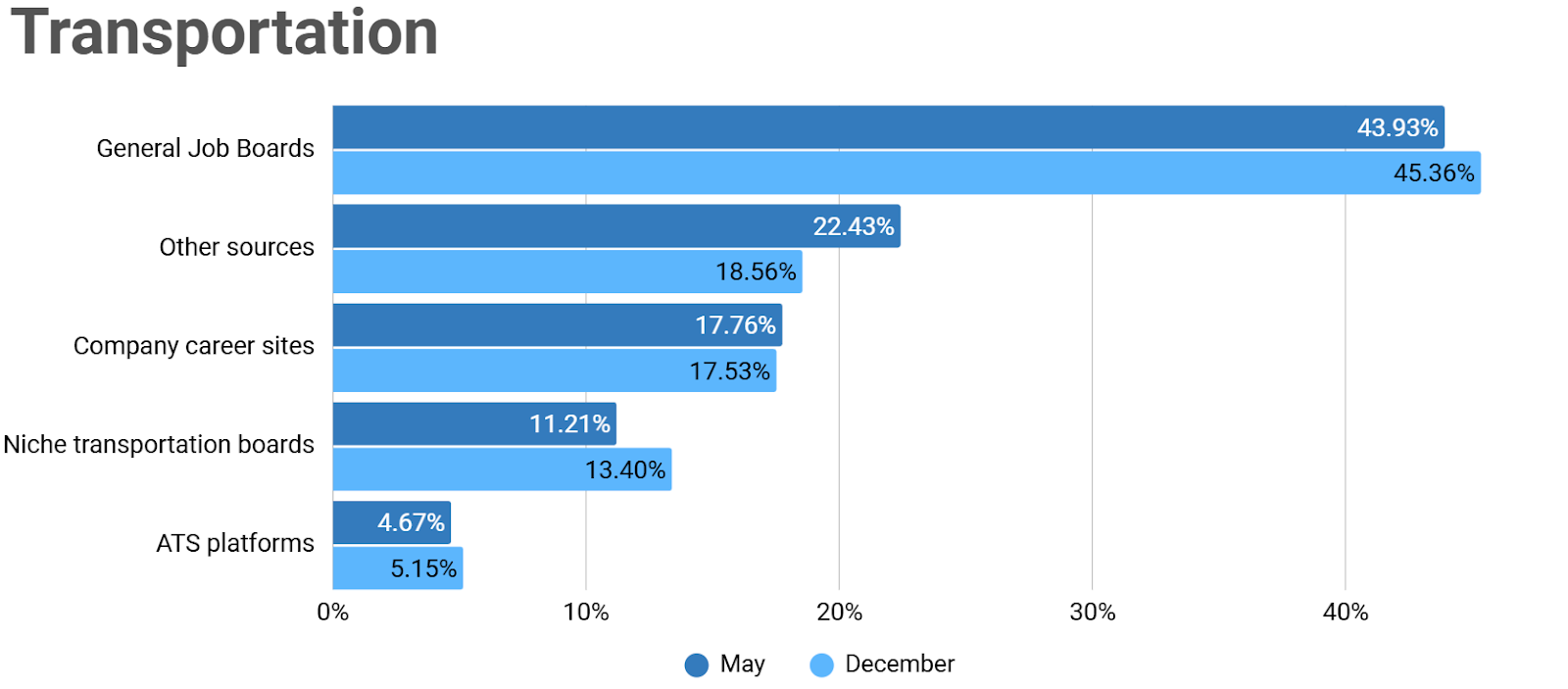
Figure 1: Transportation: Change in Apply Button Sources on Google for Jobs (May vs. December, 2025)
Note: “Other sources” groups local and non-industry specific boards, including veteran and diversity job boards.
Healthcare
Healthcare is the most balanced sector. Niche healthcare boards hold 26.7% visibility, close to general platform levels (Figure 2).
This aligns with broader labor market conditions. The US Bureau of Labor Statistics projects that healthcare occupations will add about 1.8 million jobs between 2022 and 2032, the largest increase of any major sector.
High demand and specialized credentialing requirements make niche platforms indispensable for healthcare recruiting.
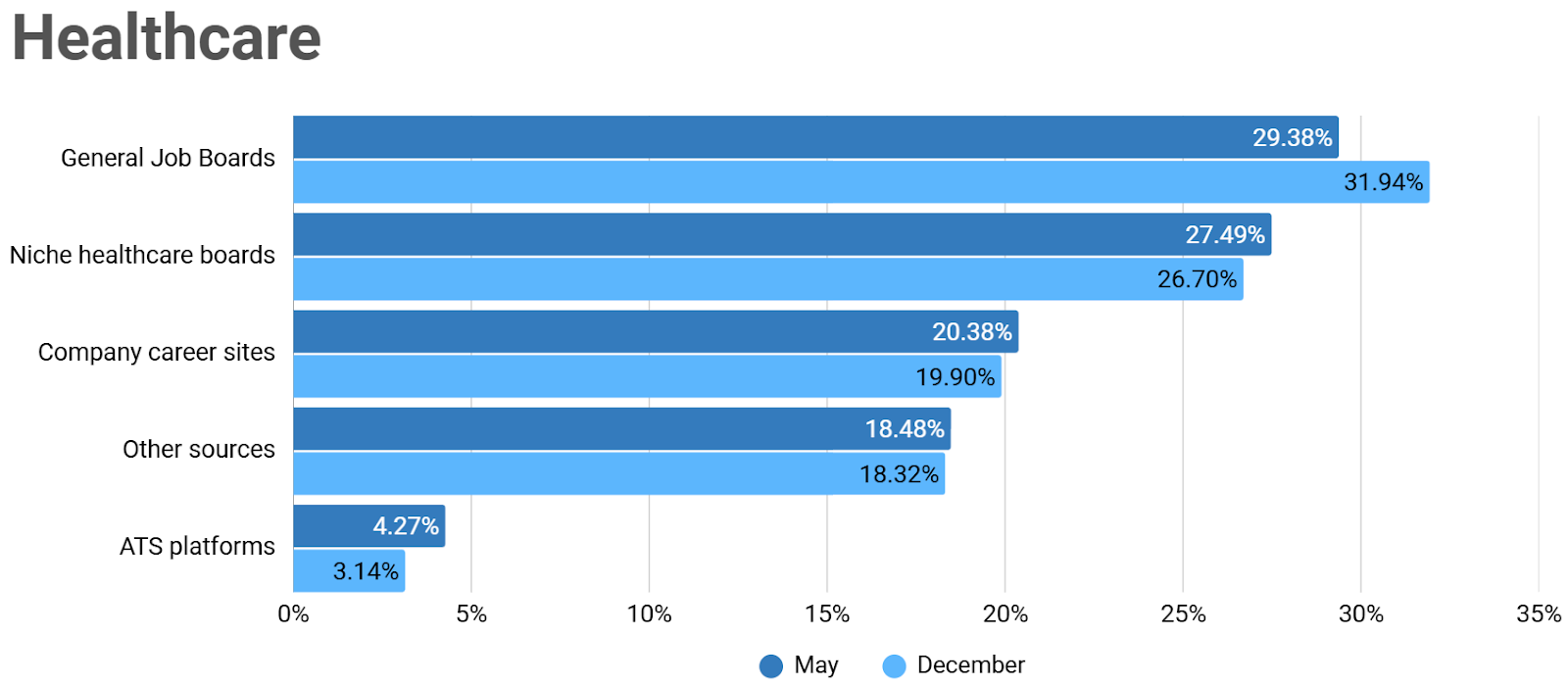
Figure 2: Healthcare: Change in Apply Button Sources on Google for Jobs (May vs. December, 2025)
Note: “Other sources” groups local and non-industry specific boards, including veteran and diversity job boards.
Skilled Trades
Niche trades boards recorded one of the largest gains, rising from 8.82% to 11.49% (Figure 3).
This reflects industry-wide hiring pressure. The 2025 Workforce Survey from the Associated General Contractors of America reports that a large share of construction firms continue to face difficulty hiring skilled craft professionals, reflecting a nationwide shortage that has persisted for several years.
As shortages deepen, employers increasingly turn to boards that attract certified, trade-specific talent.
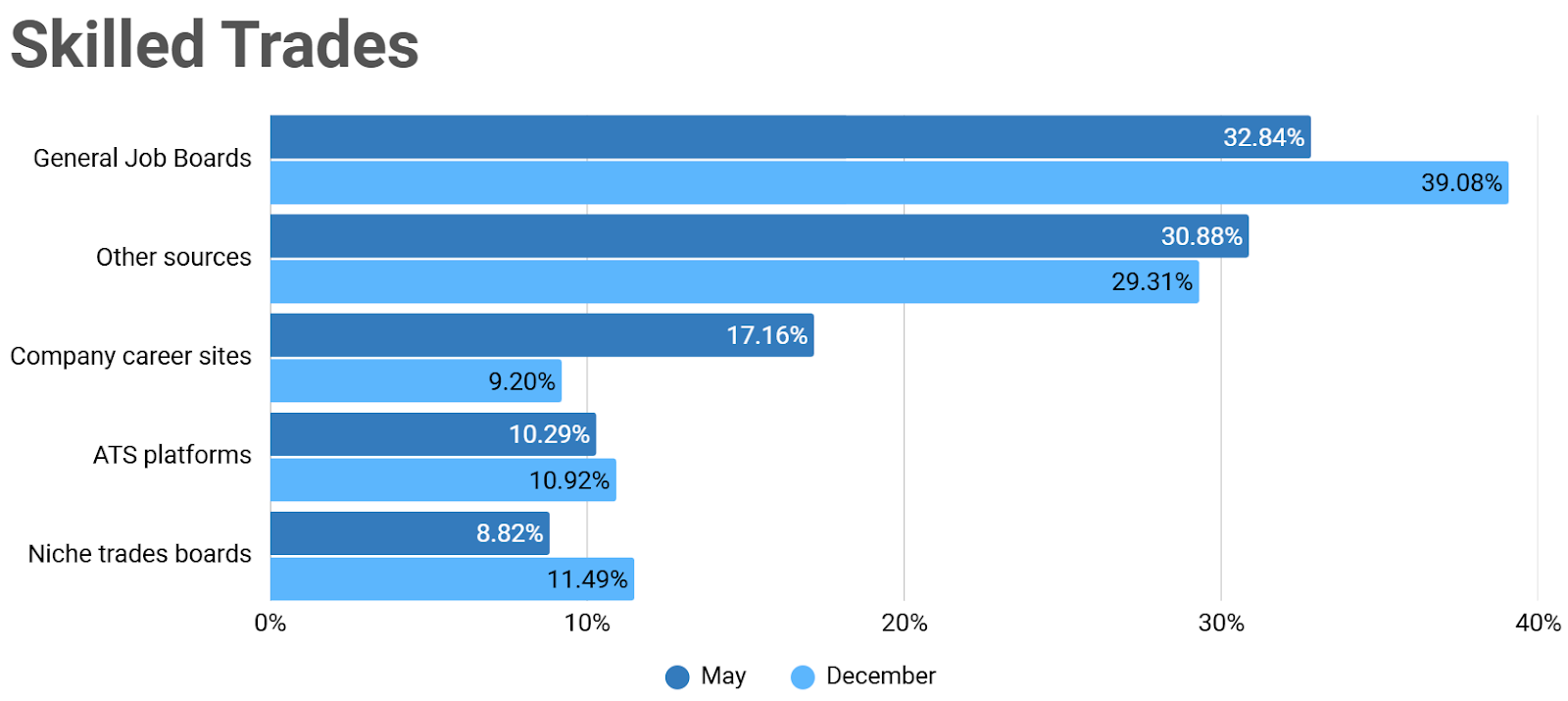
Figure 3: Skilled Trades: Change in Apply Button Sources on Google for Jobs (May vs. December, 2025)
Note: “Other sources” groups local and non-industry specific boards, including veteran and diversity job boards.
What this means for job boards and employers
Niche job boards
They are gaining measurable traction. Boards that invest in structured data, schema compliance, and AI-driven matching are securing stronger visibility on GFJ.
Generalist job boards
They retain unmatched scale, but specialization is increasingly important. Vertical-specific enhancements may help defend their share.
Employers
Relying solely on generalist boards may limit access to qualified candidates in fields such as healthcare, trucking, or the skilled trades. A blended posting approach is often the most effective strategy.
Conclusion
The dynamics of Google for Jobs continue to shift, and the difference between generalist and niche job boards is no longer driven solely by scale. Generalist boards retain their lead through volume and distribution, but niche platforms are gaining steady visibility in sectors where specialization carries more weight. Fields with strict credentialing or persistent labor shortages, such as healthcare, transportation, and the skilled trades, increasingly rely on niche ecosystems that provide more targeted candidate pools and stronger matching tools.
For job boards, the takeaway is that specialization, structured data, and accurate filtering now influence competitive positioning. For employers, depending only on general platforms may reduce access to qualified applicants in high-demand areas. Across the recruitment landscape, GFJ remains a clear indicator of how hiring strategies, technology, and labor market pressures evolve.
As Google for Jobs continues to shape how candidates discover roles and how employers allocate posting strategies, visibility within its ecosystem is becoming an increasingly important measure of recruiting effectiveness.
See this data in action
Explore structured job data and labor market intelligence for your use case.