Salary transparency has moved from a patchwork of local rules to one of the most significant global labor market shifts of the decade. What began with a handful of U.S. states now spans major Canadian provinces and a growing number of European countries, as companies prepare for the EU Pay Transparency Directive taking full effect in June 2026. France, the Netherlands, and Ireland are among the early adopters aligning national laws with the directive.
This shift is reshaping how employers communicate fairness, competitiveness, and trust. With real-time job posting data captured directly from employer career sites, Aspen Tech Labs’ JobMarketPulse enables monitoring of how quickly transparency requirements are spreading and how organizations are adjusting their hiring strategies in response.
Salary Transparency Level in U.S. Job Postings
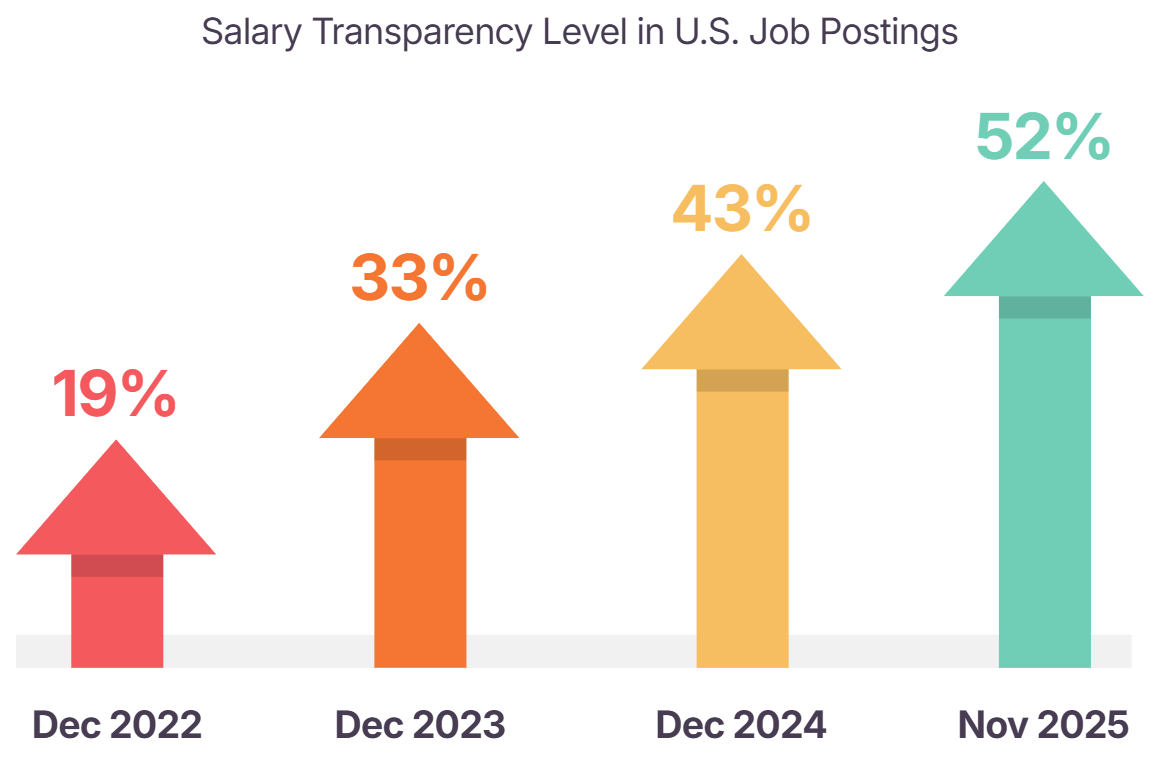
Figure 1: Growth in U.S. job postings that include salary data from 2022 to 2025
Why Salary Disclosure Matters to Candidates
Candidates increasingly expect pay information up front. Surveys consistently show that a large majority of U.S. workers are more likely to apply for a role when a salary range is included, and many lose interest when compensation is omitted. This shift has pushed employers to rethink how they attract and convert talent.
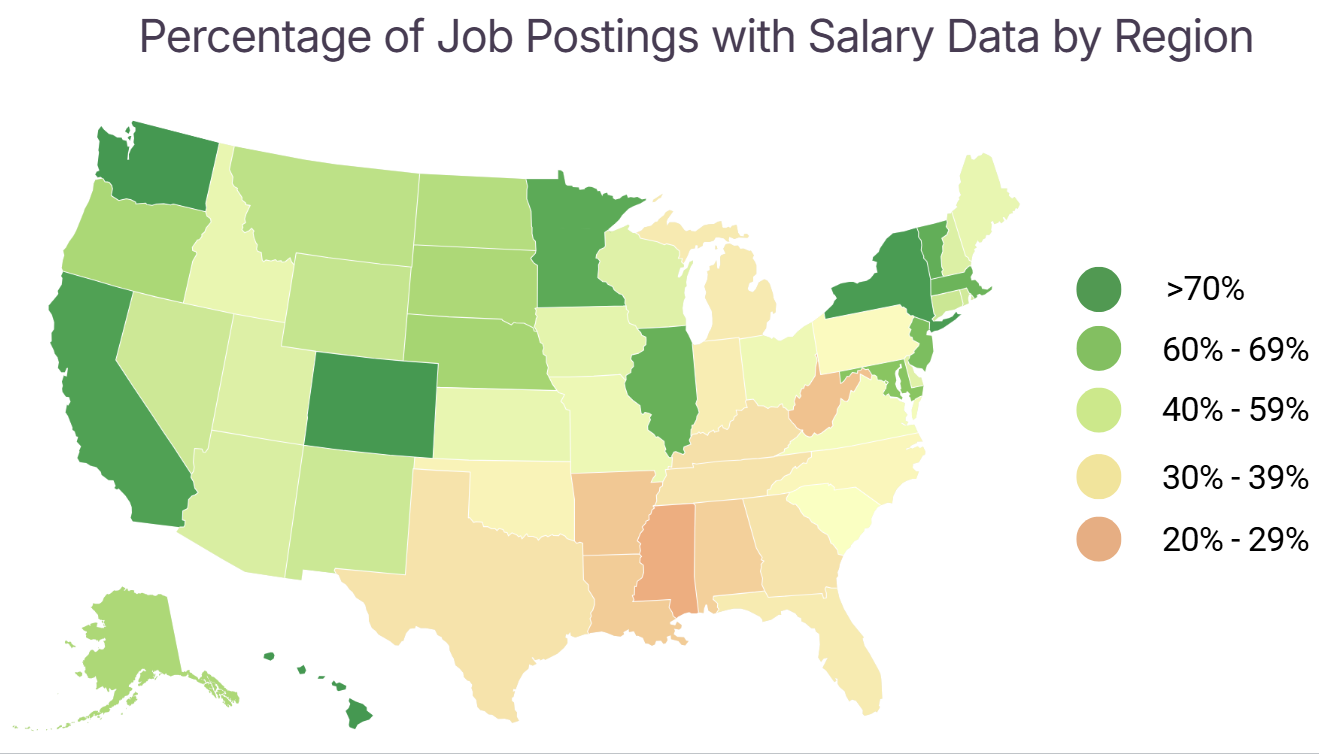
In the United States, employer adoption of salary disclosure has increased sharply since 2020. JobMarketPulse data shows a clear and sustained rise in the share of postings that include employer-provided salary information, reflecting the broader national shift toward transparency. Growth has been strongest in early-adoption states such as California, Colorado, and New York, where legislation and competitive pressure have pushed employers to standardize pay ranges across advertised roles. As more states advance disclosure requirements and national employers adopt consistent posting practices, salary transparency has moved from a differentiator to a standard expectation among candidates.
For job seekers, this visibility reduces uncertainty (Figure 2), improves the match between expectations and offers, and removes unnecessary steps in the application process. Salary transparency is also seen by policymakers and researchers as a practical tool for addressing long-standing wage disparities by making inequities easier to identify and address.
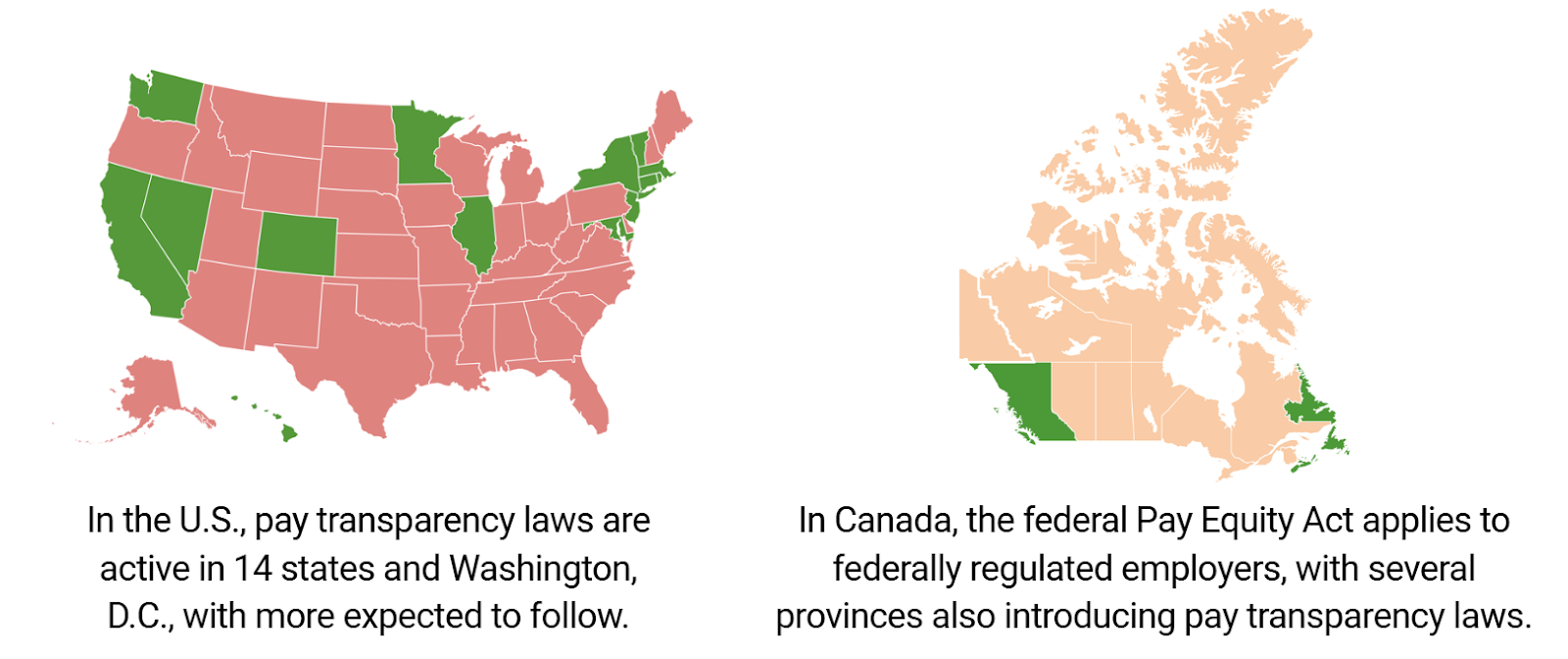
 Figure 2: Global map showing legislative adoption stages of pay transparency laws in the United States, Canada, and Europe.
The Employer Perspective: Compliance Meets Competitiveness
For employers, transparency has become both a compliance requirement and a competitive advantage. Early adopters in several regions already report improvements in applicant quality, stronger engagement, and clearer employer branding. Publishing pay ranges signals fairness and consistency, which resonates with job seekers in a market where credibility strongly influences application decisions.
Regulation continues to drive adoption. In the United States, states including California, Washington, Colorado, and New York require most employers to provide pay ranges in job postings. Related legislation is expanding across other states, prompting many national employers to standardize salary disclosure across all locations. In Canada, multiple provinces have introduced or are advancing pay transparency requirements, contributing to broader market shifts even where mandates are still in development. Across Europe, the EU Pay Transparency Directive requires all employers with more than 100 employees to report gender pay gaps and provide clear salary information to applicants by 2026, prompting early preparation among large organizations.
For multinational companies, these varied regulations create a complex environment that demands consistent, defensible compensation data across regions. Organizations that use verified employer-sourced datasets, such as those available through JobMarketPulse, can benchmark salary ranges accurately, identify regional differences early, and adjust to evolving transparency requirements with confidence.
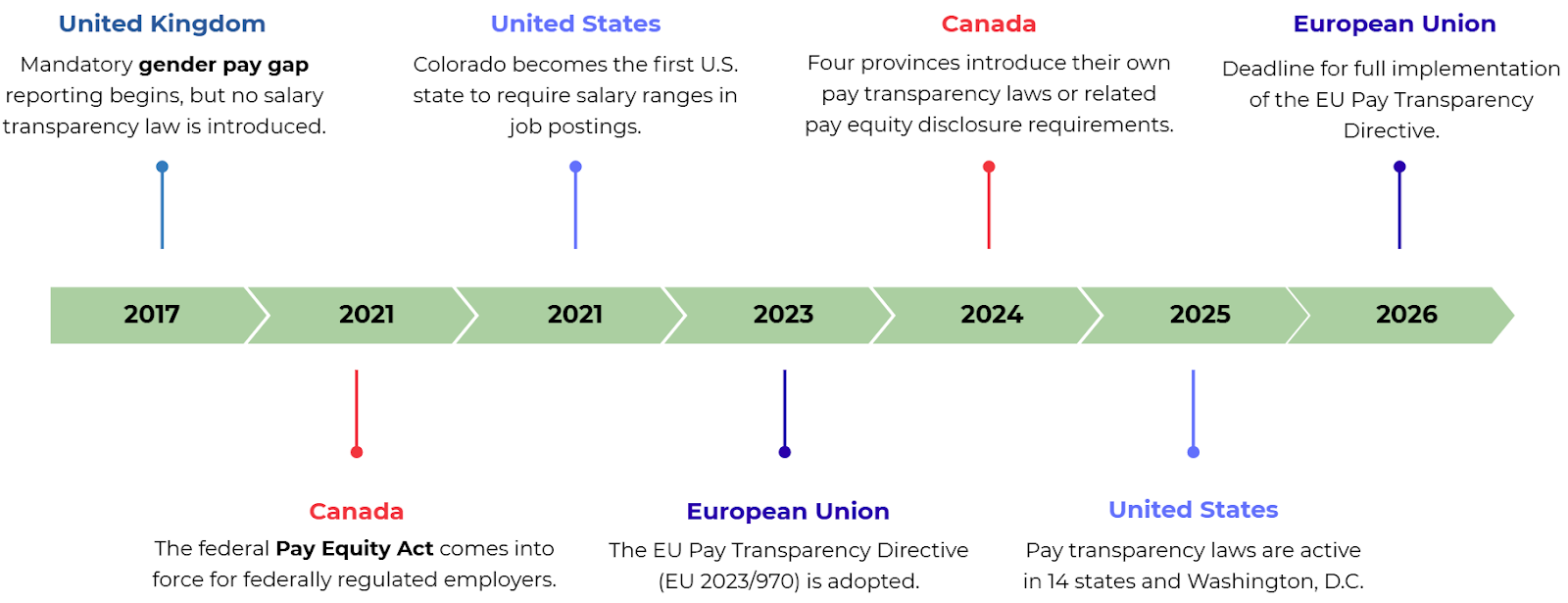
Figure 3: Timelines for pay transparency legislation in the United States, Canada, and the European Union.
Internal Implications: Transparency Within Organizations
Public salary disclosure influences internal dynamics as much as external recruitment. When employees can see advertised pay ranges for comparable roles, questions about internal fairness inevitably surface. This places new pressure on HR and compensation teams to maintain alignment between posted ranges and existing pay structures.
Organizations that conduct regular compensation reviews, adjust internal bands, and communicate clearly about pay philosophy tend to navigate this transition more effectively. Transparency also encourages accountability across teams and ensures clearer discussions about career progression, skill development, and performance expectations.
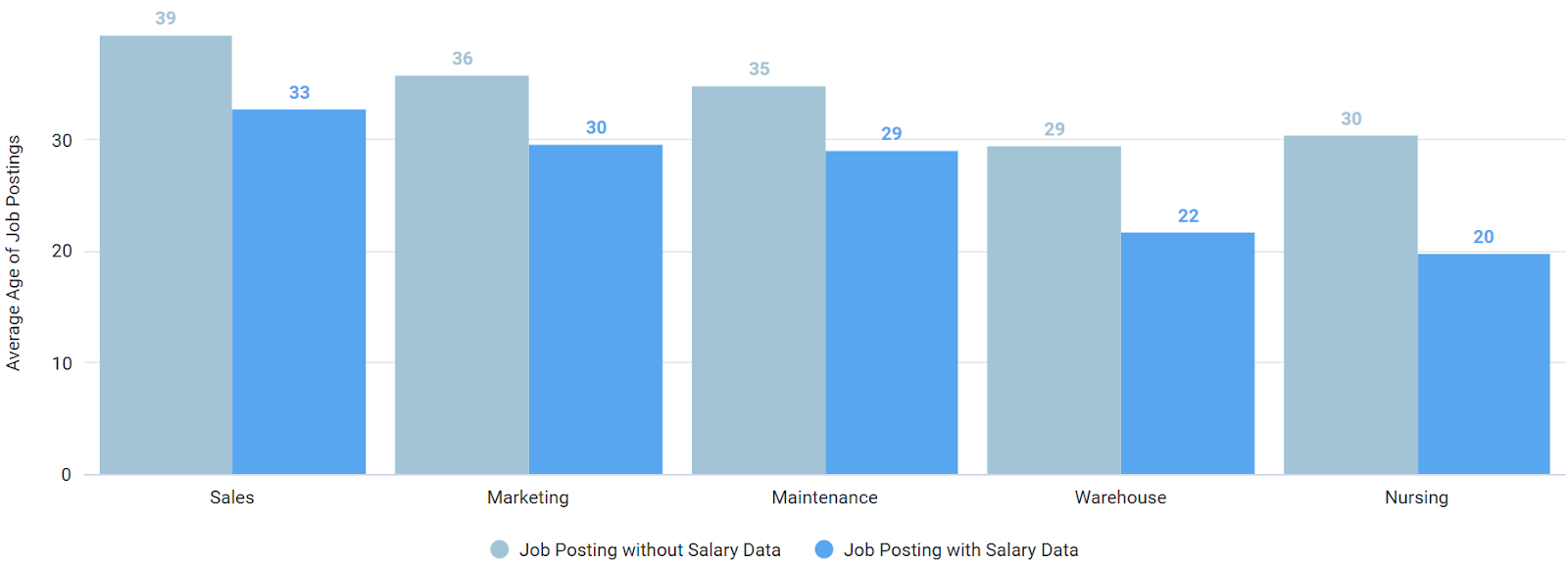
Note: Age shows how long a job posting stayed active. A closed posting does not always mean a hire, and employers may repost the same vacancy.
Figure 4: Average Job Posting Age with and without Salary Data
Global and Regional Data Insights
Even without numerical data embedded in the charts, JobMarketPulse trends show distinct differences in transparency adoption across regions.
North America
-
- continues to lead the shift, driven by a mix of legislation and employer competition.
Western Europe
-
- is accelerating adoption ahead of the EU directive, with early compliance strongest in countries that have already formalized national legislation.
Canada
- shows steady progress as provinces advance salary-disclosure requirements, influencing both public- and private-sector employers.
Adoption varies significantly by job category. Roles with structured pay bands or regulated compensation frameworks show some of the highest levels of salary disclosure. Military positions lead with the strongest transparency, followed by animal care, transportation, security, and legal roles, all categories where pay structures tend to be standardized or influenced by public-sector or compliance-driven practices.
The categories with the lowest adoption include IT, personal services, restaurants, retail, and banking. These sectors often have wide variations in pay based on experience, bonuses, commissions, or location, which can make employers slower to publish fixed salary ranges. High-volume hiring environments, such as restaurants and retail, also tend to rely on more flexible wage structures, contributing to lower transparency rates.
These differences highlight that transparency is shaped not only by legislation but also by industry norms, workforce composition, and the complexity of compensation models.
Percentage of Job Postings with Salary Data by Region
Percentage of Job Postings with Salary Data by Job Category
🔹 Top 5 Categories 🔻 Bottom 5 Categories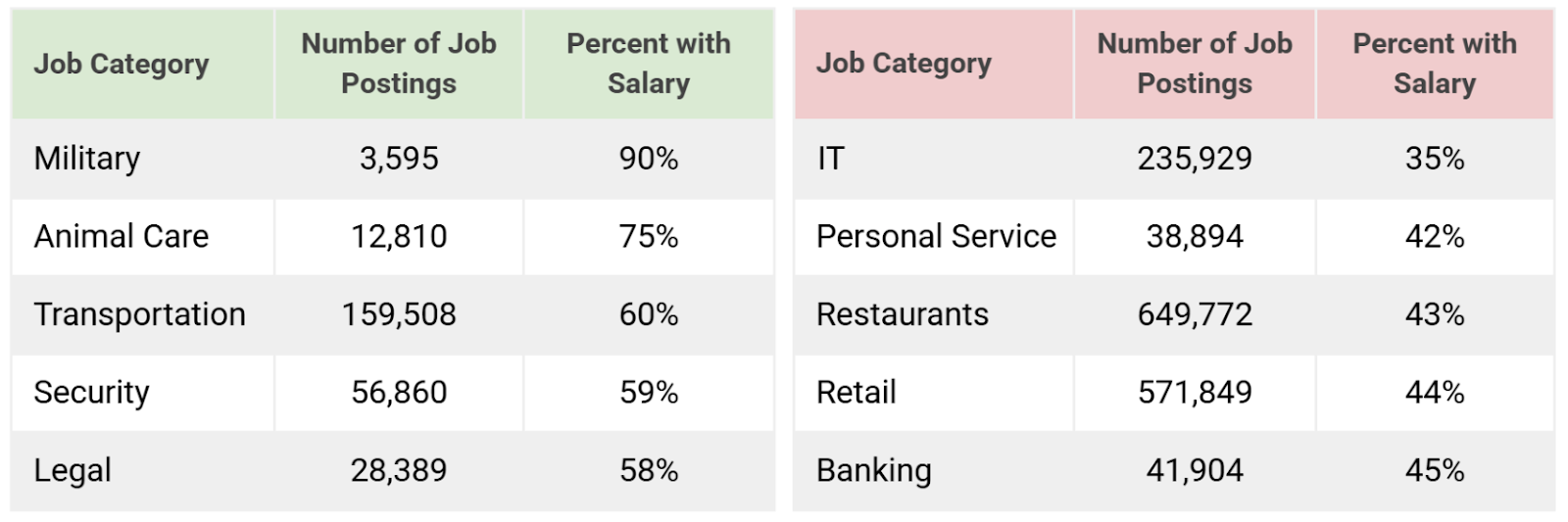
Figure 5: Comparative chart showing percentage of job postings with salary data by region and by industry from 2020 to 2025.
How JobMarketPulse Enables Data-Driven Transparency Strategies
Reliable data has become essential for employers responding to new transparency requirements. Aspen Tech Labs’ JobMarketPulse captures salary information directly from employer career pages, ensuring accuracy and eliminating the uncertainty associated with modeled or estimated data.
Because the data reflects actual employer postings, organizations can benchmark salaries with precision, identify regional pay trends, and evaluate competitors’ positioning in real time. This intelligence allows HR and compensation leaders to track compliance, understand market shifts, and plan proactively rather than reactively. In practice, this turns transparency from a compliance burden into a strategic asset.
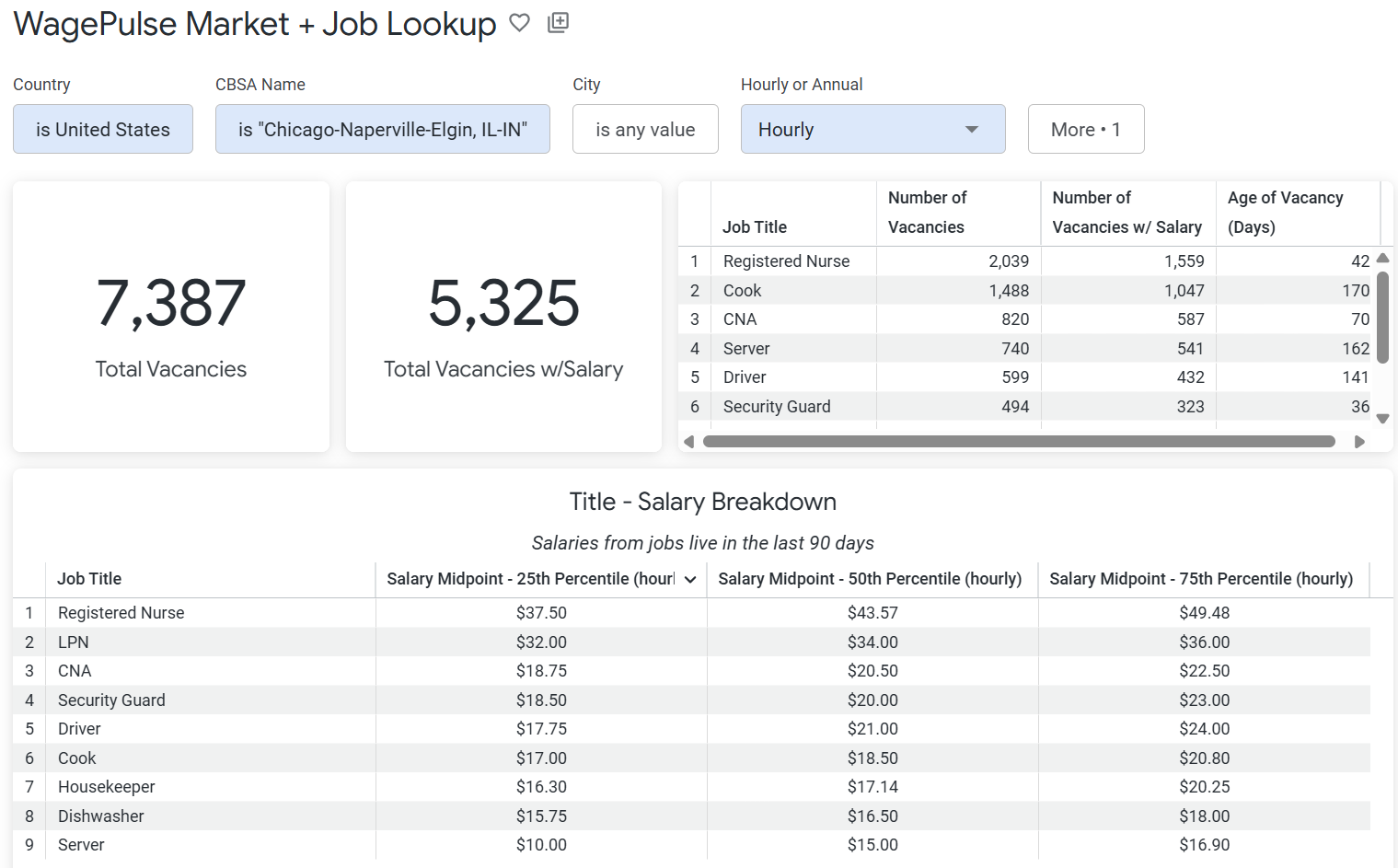
Figure 6: JobMarketPulse salary benchmarking view, showing verified data by role and location.
Conclusion
The global movement toward wage transparency has reshaped expectations across the labor market. What began as a legislative requirement is now a competitive factor that influences employer reputation and candidate trust. Transparent pay practices improve engagement and promote fairness, but they also demand careful data management and internal alignment.
As more jurisdictions implement disclosure laws and candidates increasingly expect clarity, salary visibility will become standard in job advertising. Employers equipped with accurate, real-time salary intelligence from JobMarketPulse can respond confidently to these changes, ensuring that transparency supports both compliance and long-term workforce strategy.
Data Methodology
The findings in this analysis are based on Aspen Tech Labs’ JobMarketPulse platform, which monitors hiring activity from over 200,000 direct employer career sites globally. This dataset captures a significant share of job postings, providing high-quality, near-real-time insight into employer demand. Figures presented in this report reflect postings collected directly from employers and may not represent the entire labor market, but they offer a dependable indicator of hiring trends across industries and regions. This analysis is based on Aspen Tech Labs, which captures job posting activity directly from employer career pages and applicant tracking systems to ensure accuracy and reliability. Reach out to schedule a demo.
See this data in action
Explore structured job data and labor market intelligence for your use case.